Algorithmic Governance Multi Sig Vaults
Algorithmic Governance Multi Sig Vaults: Automated Smart Contract Security
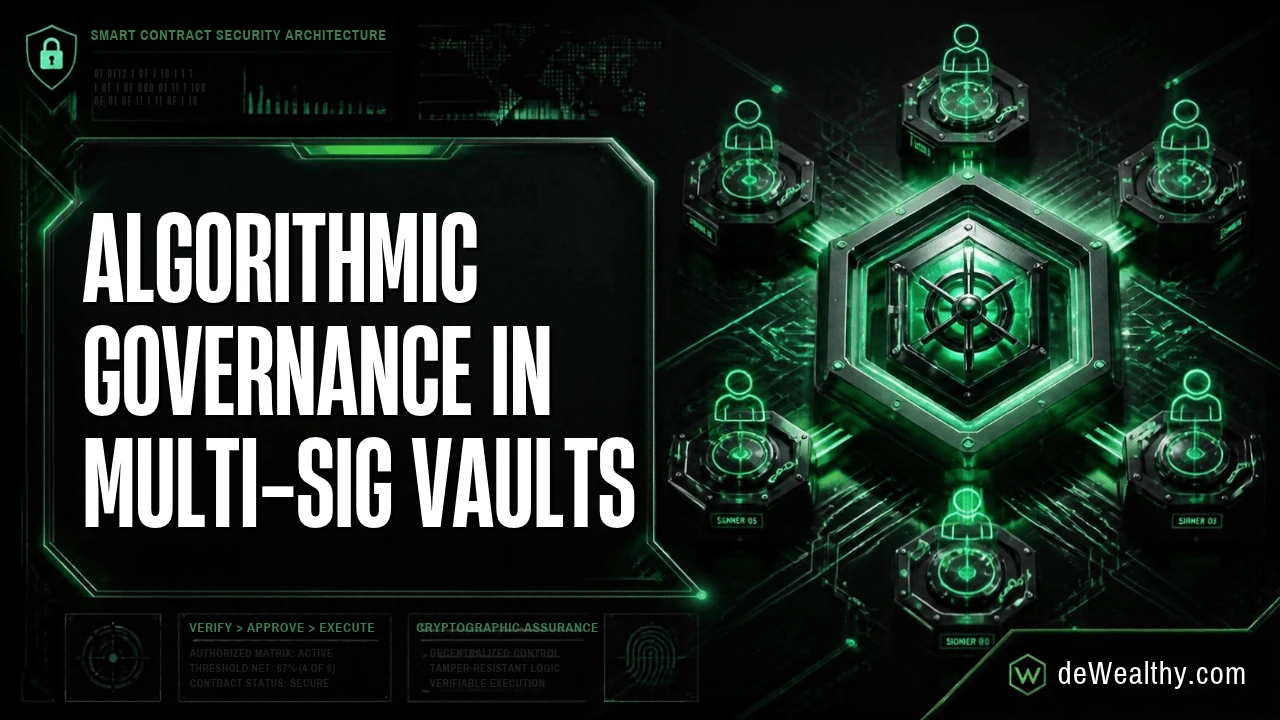
In high-stakes institutional treasury management, human discretion represents both the greatest operational asset and the most dangerous single point of failure. While traditional multi-signature wallets mitigated single-key theft, they left large treasuries exposed to insider collusion, social engineering attacks, physical coercion, and slow operational execution during high-volatility events. Implementing algorithmic governance multi sig vaults shifts security enforcement from fallible human consensus to immutable, programmatic smart contract execution—creating a fault-tolerant security architecture capable of protecting multi-million-dollar digital portfolios automatically.
1. The Structural Evolution of Cryptographic Vault Architecture
To appreciate the power of algorithmic governance, one must understand the technological evolution of digital asset vaulting over the past decade:
Generation 1: Single-Key Cold Storage
Early institutional storage relied on offline hardware wallets or paper seeds kept in physical bank vaults. While immune to online network hacks, this setup was highly vulnerable to physical theft, single-point key loss, and extreme operational latency (requiring hours or days to access capital during market crashes).
Generation 2: Standard M-of-N Multi-Signature Wallets
The introduction of on-chain multi-sig (such as a 3-of-5 key setup) distributed authority across multiple keyholders. However, standard multi-sig treats every transaction identically—whether transferring $1,000 for operational expenses or $50,000,000 for a liquidity rebalance. Standard multi-sig lacks dynamic contextual awareness, spending velocity limits, and automated emergency pause protocols.
Generation 3: Algorithmic Multi-Sig Vaults with Programmatic Controls
Modern enterprise vaults combine Multi-Party Computation (MPC) or smart contract vault logic with programmable policy engines. These vaults dynamically adjust signing thresholds, enforce timelocks, require automated compliance checks, and execute emergency security freezes based on real-time operational parameters.
2. Key Technical Mechanics of Algorithmic Governance
Algorithmic governance replaces static signature counting with dynamic rules coded directly into smart contracts or MPC policy engines. Below are the primary programmatic primitives used in enterprise vault security:
| Governance Feature | Programmatic Execution Mechanism | Security Mitigation Target |
|---|---|---|
| Dynamic Velocity Limits | Automated daily/weekly outflow caps enforced by smart contracts without requiring executive consensus. | Drains resulting from compromised private keys or compromised keyholders. |
| Tiered Timelock Escalation | Transactions exceeding specific monetary thresholds trigger mandatory 24-to-72-hour execution delays automatically. | Physical kidnapping, extortion under duress, and impulsive/unauthorized executive decisions. |
| Programmatic Circuit Breakers | Oracles detect abnormal volatility, smart contract exploit signatures, or unauthorized address interactions, automatically freezing vault outflows. | DeFi protocol exploits, oracle manipulation attacks, and systemic contagion. |
| Zero-Knowledge Address Whitelisting | Outflows are programmatically restricted strictly to pre-approved, audited contract addresses and verified counterparty accounts. | Address poisoning, phishing, and man-in-the-middle transaction hijacking. |
3. Architectural Workflow of an Algorithmic Vault Transaction
To understand how algorithmic governance operates during live treasury execution, consider the step-by-step lifecycle of a high-value transaction:
[Step 1: Transaction Initiation]
  └─► Trader/Executive initiates a $10M stablecoin withdrawal.
        │
        ▼
[Step 2: Automated Policy Engine Evaluation]
  ├─► Check 1: Is destination on the Zero-Knowledge Whitelist? ──► [YES]
  ├─► Check 2: Does amount exceed 24h Velocity Cap ($2M)? ────────► [YES: Escalate]
        │
        ▼
[Step 3: Programmatic Escalation & Timelock Trigger]
  ├─► Action A: Enforce mandatory 48-Hour Execution Timelock.
  ├─► Action B: Escalate required signature threshold from 2-of-3 to 4-of-6 (Board Level).
  └─► Action C: Dispatch encrypted alert notifications to Security Auditors & Guardian Nodes.
        │
        ▼
[Step 4: Timelock Expiration & Settlement]
  └─► If no Guardian Node triggers a Freeze Order during the 48h window, transaction settles automatically.
4. Countering Duress and Physical Coercion Scenarios
A critical vulnerability in digital wealth management is the physical safety of keyholders. If criminals know that three executives can instantly authorize a $50 million transfer from a laptop under threat of violence, those executives are at severe physical risk.
Algorithmic governance removes this threat by making immediate unauthorized transfers mathematically impossible. Even if attackers hold keyholders under physical duress, the smart contract vault enforces a mandatory 48-hour timelock for large transfers. Furthermore, keyholders can be provided with “Duress Keys”—special signing keys that appear to approve the transaction normally, but secretly signal the contract engine to permanently freeze the vault and alert private security teams worldwide.
5. Synergies with Fault-Tolerant Cryptographic Storage
Algorithmic policies are only as secure as the underlying key storage and execution environments. Smart contract rules executed on vulnerable infrastructure can still be bypassed through zero-day hardware compromises or poor private key distribution.
To build a resilient security foundation, algorithmic vaults must be paired with robust, redundant key architectures. To learn how physical security modules, air-gapped hardware, and geographic distribution protect underlying signing keys, review our guide on fault-tolerant crypto custody.
6. Strategic Placement in Cross-Border Jurisdictional Rings
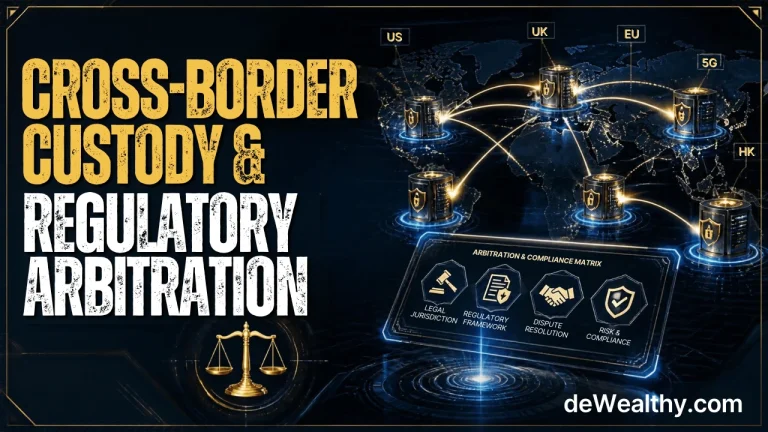
Algorithmic vaults also play a central role in managing international legal risk. By deploying vault smart contracts across decentralized networks while maintaining signing nodes in crypto-friendly jurisdictions, organizations can protect assets from single-country enforcement actions.
To examine how programmatic smart contract vaults are integrated into multi-jurisdiction family office structures, explore our analysis of cross-border digital asset custody.
7. Integration into the Master Institutional Architecture
Automated policy enforcement represents the technical core of modern digital wealth protection. However, technical execution must align with overall corporate governance, institutional audit requirements, and succession planning.
To see how smart contract automation, board oversight, and legal entity design come together into a unified operational ecosystem, read our flagship institutional digital asset framework.
8. Deployment Roadmap for Institutional Treasuries
Upgrading an existing multi-signature wallet setup to an algorithmic vault architecture requires a structured, secure approach. Technical teams should follow this four-phase deployment plan:
- Policy Modeling & Parameter Definition: Define corporate spending limits, emergency notification workflows, whitelist addresses, and timelock durations based on historical treasury activity.
- Smart Contract Audit & Formal Verification: Engage independent cybersecurity firms to perform mathematical verification and code audits on custom vault contracts.
- Testnet Simulation & Simulated Attack Drills: Execute simulated duress events, oracle failure scenarios, and emergency freeze triggers on testnets to verify policy execution.
- Gradual Treasury Migration: Transition treasury capital incrementally—starting with operational wallets before migrating core reserve vaults to the algorithmic architecture.