
Crypto Asset Security & Web3 Governance Guide
As decentralized finance (DeFi), cryptographic tokens, and Web3 protocols mature into multi-billion-dollar asset classes, institutional investors, family offices, and high-net-worth individuals face unprecedented security challenges. Unlike traditional banking environments protected by federal deposit insurance and centralized reversibility, blockchain transactions operate on absolute cryptographic finality. Establishing a rigorous crypto asset security web3 governance guide is paramount to preserving sovereign wealth against sophisticated cyber threats, counterparty failures, and operational oversights.
Building an unassailable digital vault architecture requires moving beyond simple consumer-grade wallets toward institutional multi-signature custody frameworks, air-gapped cold storage, and formal corporate governance protocols.
1. Institutional Cold Storage & Air-Gapped Key Custody
Centralized exchange (CEX) platforms and hot web wallets represent severe single points of failure. High-net-worth crypto preservation demands air-gapped hardware cold storage systems completely disconnected from wireless and internet networks.
Principles of Air-Gapped Security Architecture
- Air-Gapped QR Code Signing: Utilizing specialized hardware devices that sign transactions exclusively via physical QR code scanning, eliminating USB or Bluetooth attack vectors.
- Shamir’s Secret Sharing (SSS): Cryptographically splitting seed phrases into multiple encrypted fragments where a threshold quorum (e.g., 3 of 5) is required to reconstruct access keys.
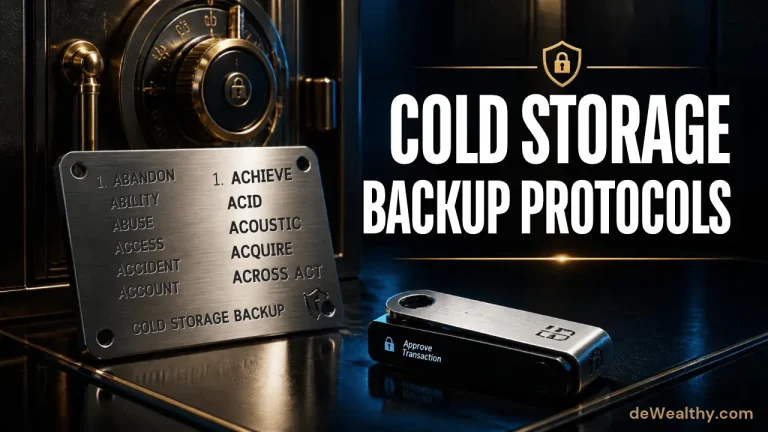
- Physical Steel Vault Storage: Stamping recovery seeds into heavy-grade titanium or stainless steel plates capable of surviving extreme fires, chemical exposure, and physical collapse.
2. Multi-Signature Smart Contract Vaults & Web3 Governance
Individual seed phrases—even when backed up securely—present operational risks if managed by a single administrator. Corporate entities and family trusts deploy multi-signature (Multi-Sig) smart contracts to enforce multi-party authorization protocols.
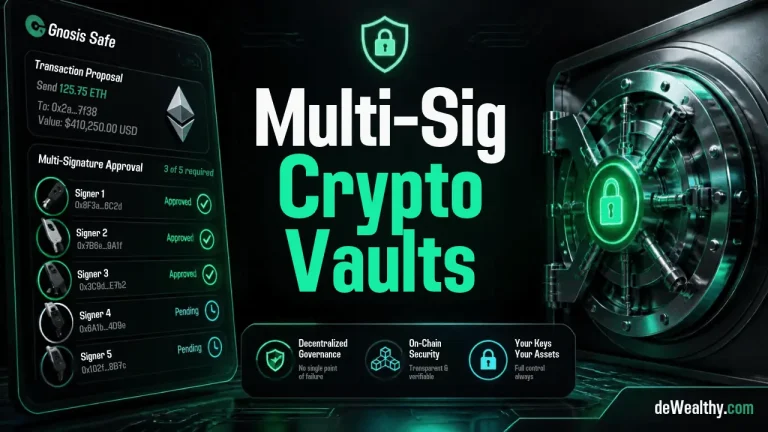
Configuring multi-sig treasuries (such as Safe/Gnosis) requires setting strict approval thresholds (e.g., requiring 3 out of 5 executive signers for transaction execution). Implementing time-lock smart contracts adds a mandatory delay window (e.g., 48 hours) for large transfers, enabling security teams to veto compromised transactions before final execution.
To ensure Web3 custody protocols align with broader corporate web asset operations and revenue streams, digital managers should regularly review website monetization and passive income guide frameworks to maintain comprehensive asset liquidity.
3. Integrating Web3 Custody with Legal Estate Governance
A flawless technical cold storage setup becomes a liability if legal heirs or corporate successors cannot gain authorized access during an emergency. Cryptographic security must be legally bound to revocable living trusts and corporate bylaws.
High-net-worth investors must complement cold storage configurations with formal securing cryptocurrency for future inheritance protocols, ensuring designated fiduciaries hold legal authority and technical recovery instructions without exposing keys to public probate.
4. Executive Mobility and Global Asset Protection
Managing multi-million-dollar crypto vaults while operating across foreign jurisdictions introduces physical security risks. Executives traveling internationally must enforce strict endpoint security and discrete operational profiles.
Combining cryptographic protection with international travel requires aligning travel routines with luxury yacht charters and private aviation guide standards to guarantee private transport, secure communications, and discreet physical safety.
Step-by-Step Crypto Security Implementation Matrix
- Perform Custody Audits: Audit all exchange holdings, DeFi liquidity positions, and wallet addresses to identify centralized exposure points.
- Deploy Multi-Sig Infrastructure: Transition primary treasury funds from single-key wallets to multi-signature smart contract vaults.
- Establish Dead Man’s Switch Triggers: Configure automated, cryptographically secure notification triggers that initiate key release protocols to legal trustees after verified periods of inactivity.
- Execute Fiduciary Legal Documents: Draft explicit digital estate addendums granting designated digital executors legal power of attorney under statutory privacy acts.
Frequently Asked Questions
What is the safest way to store large amounts of cryptocurrency?
The safest institutional method is utilizing air-gapped hardware cold storage wallets combined with multi-signature (Multi-Sig) smart contract vault configurations geographically distributed across secure physical locations.
How does Web3 treasury governance protect corporate crypto holdings?
Web3 treasury governance implements role-based access control, time-locked transaction approvals, and multi-signature authorization thresholds to prevent single points of failure or unauthorized asset transfers.
Conclusion
Achieving absolute crypto asset security requires harmonizing cutting-edge blockchain cryptography, hardware air-gapping, and institutional legal governance. By removing single points of failure and structuring multi-sig protocols, high-net-worth investors ensure their Web3 wealth remains secure across generations.