Multi-Sig Crypto Vaults Setup Guide
Managing high-value digital asset treasuries requires eliminating single points of failure. Relying on a single private key or standard hardware wallet introduces catastrophic risks if credentials are lost, stolen, or compromised. Deploying a formal multi signature crypto vaults setup utilizing smart contract architectures like Safe (formerly Gnosis Safe) establishes institutional governance over Web3 holdings.
As covered in our core crypto asset security web3 governance guide, multi-signature vaults enforce multi-party approval thresholds before any blockchain transaction can execute.
1. Understanding Smart Contract Multi-Signature Architecture
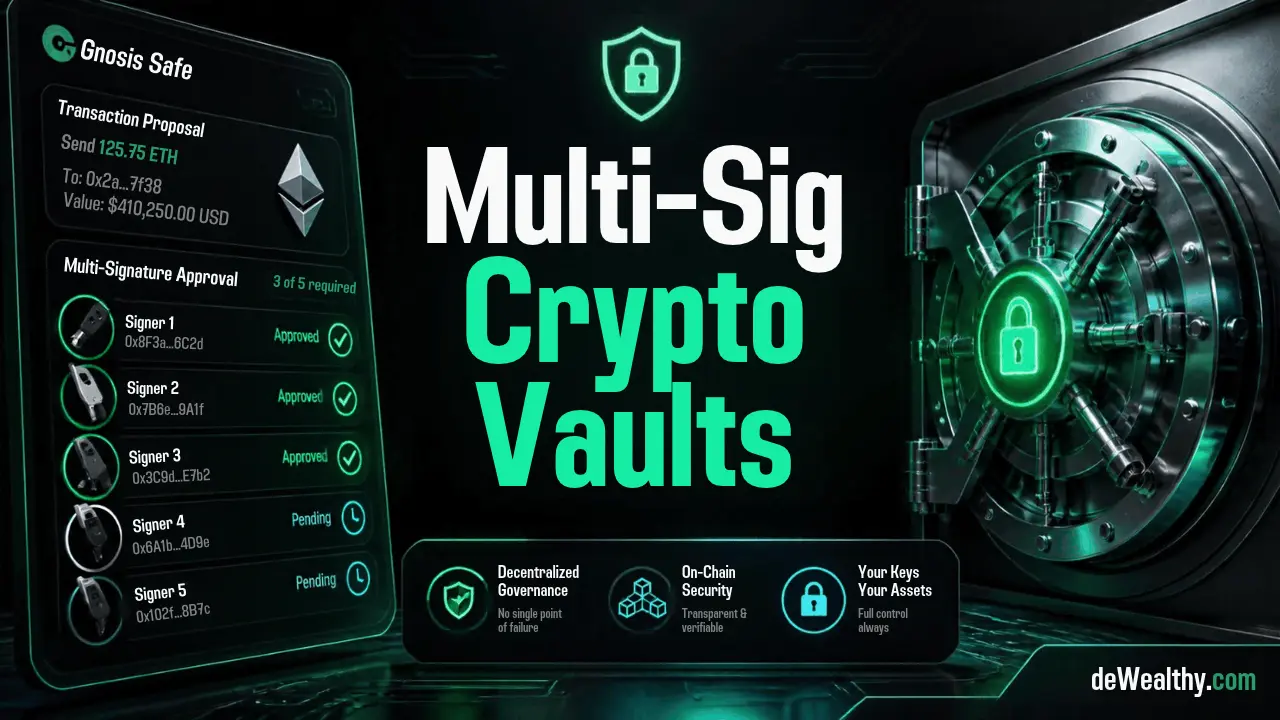
Unlike traditional seed-phrase wallets where one key controls total spending power, multi-sig smart contracts require a predetermined quorum of distinct key signers (e.g., 2-of-3 or 3-of-5) to approve outbound transactions.
Key Security Advantages for Family Offices and HNWIs
- Elimination of Single-Key Compromise: A hacker gaining access to one hardware key cannot drain the vault without reaching the required signing threshold.
- Role-Based Approval Governance: Corporate treasuries can assign signer rights across trusted executives, legal fiduciaries, and cold-storage vaults.
- Time-Locked Protection Modules: Integrating time-lock modules imposes mandatory execution delays, allowing administrators to veto malicious or unauthorized transfer attempts.
2. Step-by-Step Gnosis Safe Configuration Strategy
Configuring an institutional multi-sig vault requires combining distinct hardware signing devices across geographically distributed locations.
Assign signer keys exclusively to air-gapped hardware devices (such as Ledger, Trezor, or Keystone). Avoid using software browser extension wallets as signer nodes. Store hardware devices in separate physical locations, such as bank safety deposit boxes or secure corporate safes.
To ensure Web3 treasury growth aligns with broader web traffic and commercial property expansion, domain managers should review our website seo traffic growth guide to protect related digital ecosystem traffic.
3. Aligning Multi-Sig Governance with Estate Planning
A multi-sig vault setup must account for emergency succession. If key signers become incapacitated or deceased, remaining signers must hold a legal and technical pathway to maintain vault operations.
High-net-worth investors should integrate multi-sig key hierarchies with structured securing cryptocurrency for future inheritance protocols, ensuring designated digital executors hold legally binding access instructions within living trust agreements.
Frequently Asked Questions
Why are single-key hardware wallets risky for institutional crypto holdings?
Single-key wallets present a single point of failure; if the key is lost, stolen, or compromised, the entire asset balance can be permanently lost without recovery options.
What is a recommended multi-sig threshold setup for corporate treasuries?
A 3-of-5 threshold setup is widely considered optimal, requiring three distinct hardware wallet approvals out of five designated signer keys geographically distributed across trusted executives and legal custodians.
Conclusion
Implementing multi-signature crypto vaults replaces single-key vulnerability with institutional multi-party governance. By leveraging Gnosis Safe architecture, hardware isolation, and legal trust alignment, your digital treasury remains secured against internal and external threats.